The Invisible Line That Decides How Fast You Can Renovate in Historic Easton
September 17, 2026
September 17, 2026
Two buyers can close on similar brick rowhouses six blocks apart in Easton this fall. One gets a certificate of appropriateness for a new rear addition in six weeks. The other is still waiting past the point where a lender's rate lock expires. The difference usually isn't the project. It's which side of an invisible line the house sits on, and whether the county's paperwork labels the structure "contributing" or not.
That line runs along the edge of Easton's town limits, and almost nobody asks about it before making an offer.
Talk to enough people who've renovated in and around Easton and you'll hear two different sets of rules described with total confidence, because both are correct depending on the address. Inside the Town of Easton, exterior work on a historic-district property goes to the Town's own Historic District Commission, a seven-member volunteer board appointed by the Mayor and Town Council. Step outside the town line into the surrounding county, and jurisdiction shifts to a completely separate body: Talbot County's Historic Preservation Commission, also seven members, but focused on villages and rural historic properties rather than the town core.
That second commission is the one that matters if you're eyeing a historic property in Royal Oak, Tilghman Island, Neavitt, or Newcomb, all of which the county studied as part of a historic-village survey completed by outside consultants in 2017. Same word, "historic," attached to the address. Different board, different guidelines, different meeting calendar.
Here's how the two compare on the questions a buyer actually cares about:
| Town of Easton HDC | Talbot County HPC | |
|---|---|---|
| Governs | In-town National Register district (roughly 900 buildings, 232 acres) | Villages and rural historic properties outside town limits |
| Established | Ordinance-based, district listed on the National Register in 1980 | Created under the county's 1976 Historic District Ordinance |
| Members | 7, appointed by Mayor and Town Council | 7 county residents, appointed by County Council |
| Where it meets | Town of Easton offices | Talbot County Department of Planning and Zoning |
If your contract has a renovation contingency and you haven't confirmed which of these two boards actually has authority over the parcel, you're negotiating a timeline against the wrong calendar.
Within the Town of Easton's district, the ordinance itself draws a second line that matters just as much as the first. The code instructs the Commission and staff to be strict when reviewing plans for a "contributing structure," meaning a building research has identified as historically or architecturally significant. For everything else, including new construction, the same code tells them to be lenient unless the project would seriously harm the character of surrounding buildings.
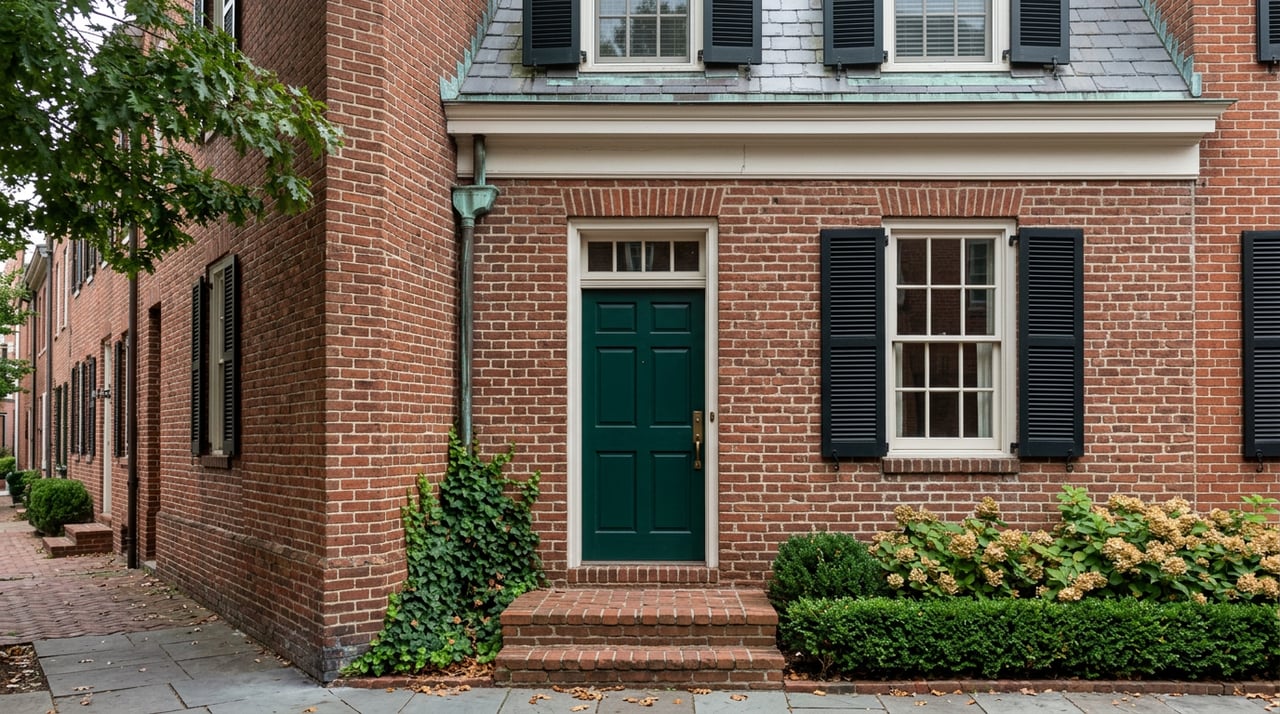
That distinction isn't cosmetic. Some of the district's roughly 900 buildings carry outsized weight in this calculus. The James Neall House on South Washington Street, a Federal-style brick townhouse built around 1805 and now owned by the Talbot County Historical Society, is exactly the kind of contributing structure that draws the stricter standard. So does the Tidewater Inn at Dover and Harrison, which is notable because it was built in the late 1940s, technically outside the district's historic period of significance, and is still treated as contributing for what it represents to the town's development. A buyer assuming that "newer" automatically means "easier review" inside this district would be wrong on a specific, checkable point.
Before you write a renovation plan into an offer, it's worth asking whether the seller's disclosure packet or the county's property card identifies the structure as contributing. That single word changes which side of the ordinance's own stated leniency you're on.
Every exterior change that isn't classified as routine maintenance needs a certificate of appropriateness from the Town of Easton before work starts. Some categories, like in-kind asphalt shingle roof replacement or HVAC installation, can be cleared administratively by Planning and Zoning staff for a $25 fee. Everything else goes before the full Commission, currently at $75 for residential applications and $200 for commercial, a fee schedule the town updated as of July 1, 2025.
The part that actually protects a buyer's timeline is buried in the ordinance's procedural language: if the Commission fails to act on a complete application within 45 days, the proposal is automatically approved unless both sides have agreed to an extension. That clock cuts both ways. It's leverage against an indefinite hold, and it's also a reason to make sure your application is complete on day one rather than day thirty, since an incomplete filing doesn't start the clock at all.
If there's one line item that surprises buyers more than any other, it's windows. On a contributing structure, front-facing windows and any facade facing a primary right of way are required to be wood. Aluminum or fiberglass-clad wood windows are only an option on side or rear elevations, and even non-contributing buildings get more latitude only because they carry less historic weight. If your renovation budget assumed a full-house window replacement with standard vinyl or clad units, that number needs revisiting before you're under contract, not after the Commission meeting.
A second, smaller rule catches people off guard for a different reason: removing any tree over 10 inches in diameter, measured at breast height, requires a letter from a Maryland licensed tree expert evaluating its condition, unless the removal is for the tree's health. It's a small line in the code, but it turns a weekend landscaping decision into a documented process with a professional opinion attached.
Before you waive a renovation contingency on a historic Easton property, it's worth working through a short list:
Sellers of historic Easton properties carry their own version of this risk. If exterior work was done without a certificate of appropriateness, or outside the terms of one that was issued, the town can issue what the ordinance calls an Order to Restore, requiring the owner to return the property to its prior condition using matching materials and design. That's a meaningful liability to surface during a listing conversation rather than during a buyer's due diligence period.
If a Commission decision doesn't go a homeowner's way, the ordinance does provide a path forward. An aggrieved party has 30 days to appeal to the town's Board of Zoning Appeals, with further appeal available to the Circuit Court for Talbot County. It's a real process, but it adds time on top of an already deliberate review, which is one more reason the 45-day automatic approval clock matters as much as it does.
Easton's historic district isn't hard to love. Streets like Washington, Dover, Goldsborough, and South carry the kind of brick architecture and mature streetscape that drew buyers here in the first place. But the same character that makes these blocks desirable also means the renovation math is different than it looks from a listing photo. The real question isn't whether a certificate of appropriateness is required. It's which commission reviews it, whether the structure's contributing status invites strict or lenient scrutiny, and whether your timeline can absorb a process built around a 45-day clock rather than a same-week approval.
If you're weighing a historic property in town versus one in a village like Royal Oak or Tilghman Island, that distinction is worth resolving before you write an offer, not after.
How do I find out if a specific Easton property is inside the town's historic district or under county jurisdiction? The Town of Easton's Planning and Zoning office can confirm whether a parcel falls within town limits and the historic district boundary. For properties outside the town, Talbot County's Department of Planning and Zoning handles that determination for the county's Historic Preservation Commission.
Does routine maintenance need a certificate of appropriateness? No. The ordinance excludes maintenance that doesn't alter the exterior fabric or features of a structure, along with customary farming operations and landscaping that has no material effect on historic significance. The town's Historic District Routine Maintenance Guide spells out specific examples.
What if my project touches both a contributing and non-contributing building on the same lot? The ordinance directs the Commission to apply the stricter standard to the contributing structure and the more lenient standard elsewhere, so a mixed project may see two different levels of scrutiny within the same application.
Can I start work while my certificate of appropriateness application is pending? No. Work should wait until a certificate is issued, whether through staff approval or a full Commission vote, since work performed without one can trigger an Order to Restore regardless of how the project eventually would have been received.
If you're weighing a historic-district property in Easton, or comparing it against a village home in Talbot County with a different review board altogether, Tracy Higgs Wagner can help you sort out which rules actually apply before you write an offer. Let's connect.
Stay up to date on the latest real estate trends.





Get assistance in determining current property value, crafting a competitive offer, writing and negotiating a contract, and much more. Contact me today.